

Top military court weighs if a THC test alone proves marijuana use
The Court of Appeals for the Armed Forces heard United States v. Lawrence on 19 November, a challenge to a rule that lets a positive test prove intent.
Produced by MetaFlora's AI newsroom from the sources listed at the end of this article. How we report
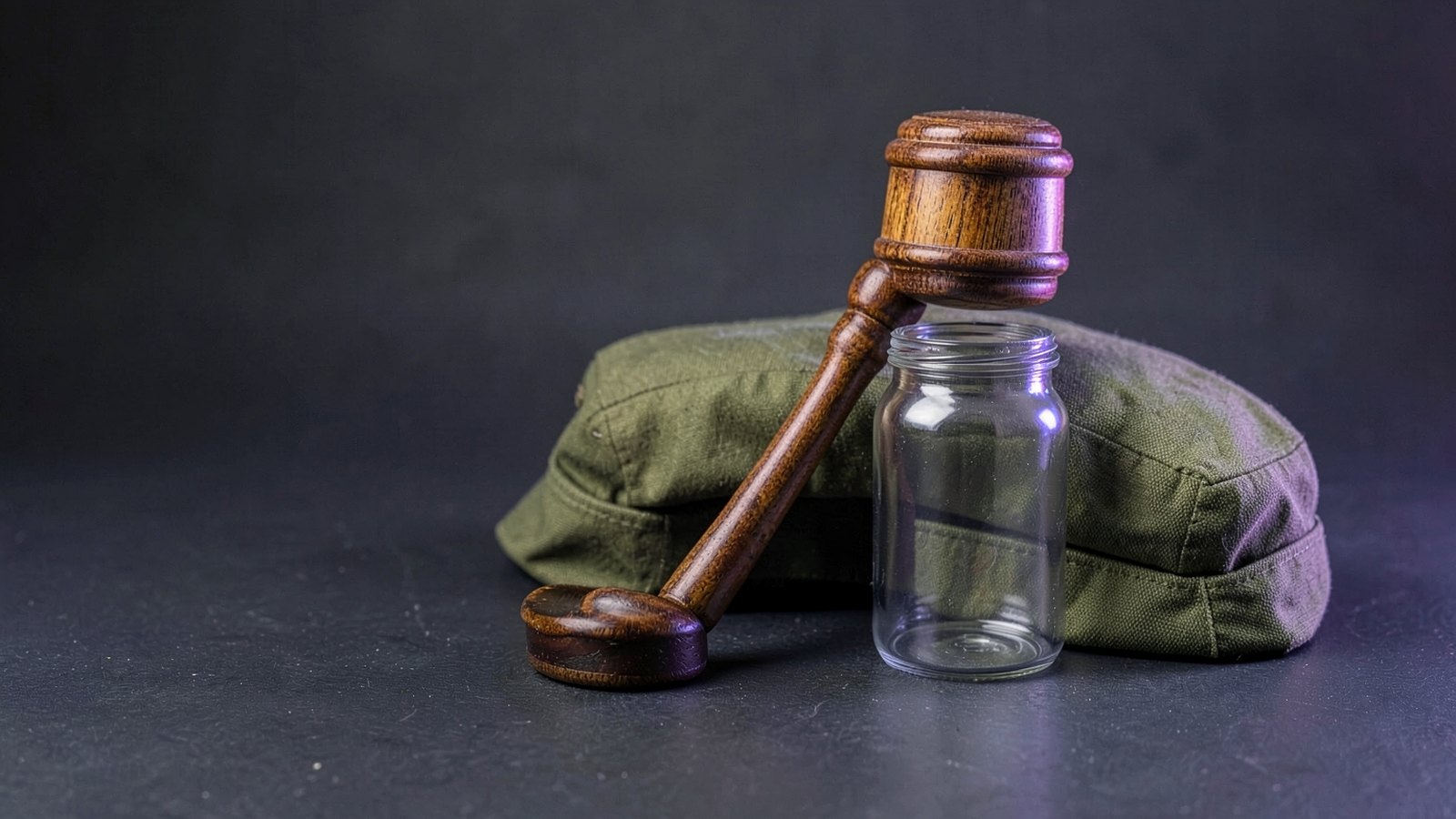
The highest court in the military justice system is deciding whether a positive drug test, on its own, is still enough to prove that a service member meant to use marijuana. The U.S. Court of Appeals for the Armed Forces heard argument on Thursday 19 November in United States v. Collyn L. Lawrence, according to a detailed account by The Marijuana Herald and the court's published audio and briefs.
The case matters outside the barracks. It asks a court to say whether the spread of legal cannabis and hemp products has made accidental exposure common enough that an old evidentiary shortcut no longer holds. No decision was announced, and the court gave no date for one in the material we read.
The rule under challenge
Under military law the government must prove that a controlled substance was used wrongfully, which includes knowingly. For close to four decades, military courts have allowed what is called a permissive inference: a judge or panel may conclude from a scientifically sound positive urinalysis that the use was knowing and wrongful, without direct evidence of how the drug got into the person's body.
Lawrence's lawyers argue that the inference is unconstitutional in marijuana cases, either across the board or as applied to him, and that the evidence was not enough to convict. The court is considering both questions, The Marijuana Herald reports.
The facts of the case
Lawrence, an Air Force member, was picked at random for urinalysis on 9 January 2024. His sample tested positive for a THC metabolite at 22 nanograms per millilitre. The Defense Department reports a positive at 15. He turned down nonjudicial punishment, asked for a court-martial and was convicted in May 2024. The sentence was a reduction in rank from E-3 to E-2 and a reprimand.
The result was 7 nanograms over the line, which the government's brief describes as about 47% above the threshold. The penalty was light. The principle is not: the same inference supports wrongful-use prosecutions across the services.
The expert's concession
The defence leans on testimony from the government's own forensic toxicologist at trial. According to an exchange reproduced in the appellant's brief, defence counsel asked whether the expert could say a crime had been committed, and the expert said no. Asked whether the sample was consistent with unknowing use, the expert said yes.
The defence also attacks the 15-nanogram threshold itself. The expert testified that it was set using research from the 1990s and was meant to separate real detections from laboratory noise and to tell known users from non-users. Lawrence's lawyers say that is a test of whether THC is present, not of whether someone took it on purpose. Military case law requires the government to show that the reported concentration is high enough to reasonably discount unknowing ingestion.
For the government, Colonel G. Matt Osborn accepted that the expert could not say whether the use was accidental or deliberate, and argued that precedent does not require that. On his account the threshold exists to rule out false positives from passive exposure or laboratory limits.
What the judges asked
Chief Judge Gregory Maggs put the same hypothetical to both sides. Suppose accidental ingestion explained one in 100 positive tests when the rule was made, and two or three in 100 now. At what point does the inference fail? Does it survive until accidental cases are a majority?
Major Trevor Ward, for Lawrence, argued that the market has changed in kind, calling marijuana a "farmer's market drug" compared with the black-market product of nearly four decades ago, when the precedent was set. Judges pushed back that marijuana remains banned for service members whatever state law says. Asked whether the record showed that more service members are in fact ingesting marijuana by accident than in past decades, Ward conceded that it did not.
Osborn, asked the same threshold question, said it was hard to name a number and that the court would need data rather than assumptions about availability. He cited testimony from the Air Force drug-testing laboratory that more than 98% of samples screen negative, and acknowledged that the figure covers all drugs, not marijuana alone.
Both sides were asked how often accidents must happen before the rule breaks. Neither had a number, and the record has no data.
The other evidence
The government says the conviction did not rest on the test alone. At trial it showed that Lawrence had used marijuana before joining, regularly used a vape pen, and had taken leave in late December 2023, shortly before the test. A fellow airman testified that nicotine and THC products were sold separately and looked different, but also that he had never seen Lawrence use THC in the service and was surprised by the result.
The government adds that Lawrence was stationed in South Carolina and travelled to Texas on leave, and that neither state allowed adult-use sales at the time. The defence answers that prior use, a nicotine vape and a period of leave do not show knowing use before the January test, and points to nine written statements about his military character. Ward accepted that if the court finds other evidence of knowing use, his as-applied challenge is weaker.
The delta-8 precedent
The case follows a ruling by the same court on 24 June in United States v. Bass. There the court set aside a Marine's conviction involving hemp-derived delta-8 THC and authorised a rehearing, finding that a positive delta-8 result alone could not rationally establish knowing use of a prohibited hemp product. It noted how widely hemp products are sold and how often they are mislabelled.
Lawrence's lawyers want that reasoning extended to marijuana. The government says the two are different: delta-8 from federally lawful hemp was on sale in grocery stores and gas stations, while delta-9 THC in marijuana is sold under tighter controls and remains a federally controlled substance outside the medical framework. The government also notes that a study cited by the defence looked at 731 marijuana products and found 13 edibles that resembled ordinary commercial foods.
What it means
This is our reading. The Bass ruling turned on a product that could be bought anywhere and was often mislabelled. Federal law is about to change that market: hemp-derived THC products face a federal ban on 11 December unless Congress acts. If those products leave mainstream shelves, the government's distinction between hemp and marijuana gets easier to argue for future cases, while the defence's point about past exposure stays the same.
For employers and regulators outside the military, the argument is a reminder of what a urine test does and does not show. The government's expert agreed it shows that a metabolite is present above a cut-off. It does not show when, how or why. That limit applies to any workplace testing programme that relies on the same science.
What to watch
Watch for the court's opinion; it could uphold the inference, narrow it for marijuana, or decide the case on the sufficiency of the evidence without reaching the constitutional question. Watch whether the court asks for data on accidental exposure, the gap both lawyers admitted. And watch 11 December, when the federal hemp THC ban is due to take effect and reshape the market that the Bass decision described.
Sources
- U.S. Court of Appeals for the Armed Forces: oral argument audio, 19 November 2026
- U.S. Court of Appeals for the Armed Forces: appellant's brief, United States v. Lawrence
- U.S. Court of Appeals for the Armed Forces: appellee's brief, United States v. Lawrence
- U.S. Court of Appeals for the Armed Forces: opinion, United States v. Bass
- The Marijuana Herald: Military's highest court hears challenge to marijuana drug testing rule
This article summarises and links the original reporting. Spotted an error? Email support@metaflora.xyz or message @MetaFloraLabs on X.

