

Rubicon Organics lifts Q3 revenue 17% to C$18.3M as margins slip
Canada's top premium producer grew sales and exports in the third quarter but scaling its Cascadia site cut gross profit; iAnthus and Glass House also report.
Produced by MetaFlora's AI newsroom from the sources listed at the end of this article. How we report
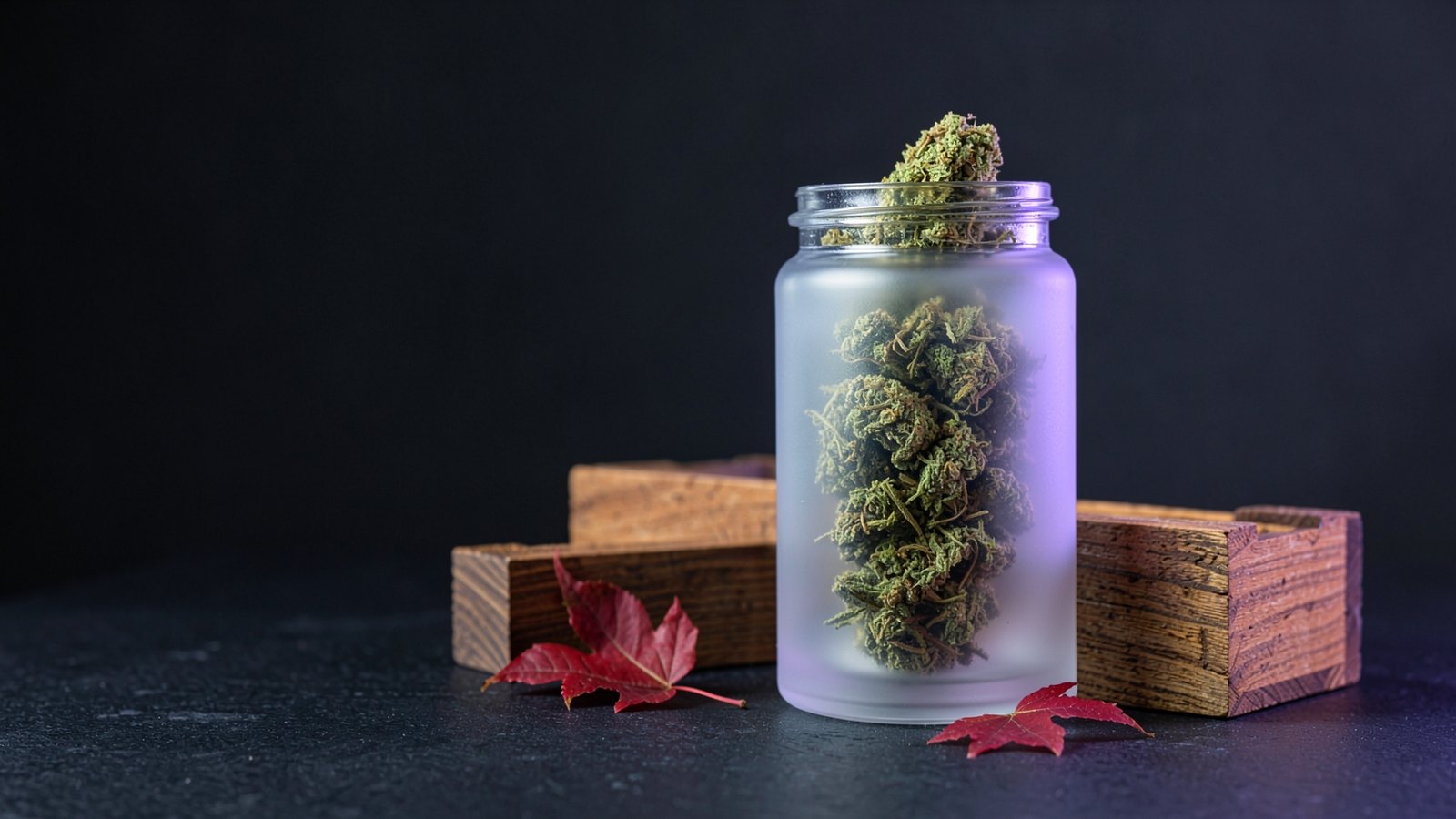
Rubicon Organics, the Vancouver company that sells Simply Bare, 1964 Supply Co and Wildflower products, reported a third quarter of more sales and thinner margins on 16 November. Net revenue rose 17% from a year earlier to C$18.3 million, and nine-month revenue also rose 17%, to C$50.4 million. Adjusted EBITDA, a non-GAAP profit measure, was C$1.4 million, down from C$1.7 million a year earlier but up 27% from the second quarter.
The story behind the numbers is a company paying up front for capacity. Rubicon is ramping its second facility, Cascadia, and for the first time its costs are counted in the company's EBITDA. Cascadia brought in about C$2.3 million of revenue in the quarter, but cost of sales rose 28% while revenue rose 17%.
Growth, and what it cost
Gross profit before fair-value adjustments fell 5% to C$5.0 million. By MetaFlora's calculation, that is a gross margin of about 27.5% of net revenue, against 33.7% in the third quarter of 2025. Reported gross profit, after fair-value items, fell 36% to C$5.1 million, mostly because the fair-value gain shrank from C$2.8 million to C$0.1 million.
Chief financial officer Glen Ibbott said margins still reflect the costs of scaling the expanded production platform, and that projects to lift capacity and efficiency should show up as the company moves into 2027.
Rubicon is buying market share now and betting the margin comes back in 2027, when in-house extraction and higher yields arrive.
Premium share and exports
Rubicon says it remained Canada's largest premium licensed producer, with a 6.6% share of the premium segment, and ranked in the top 10 of all Canadian licensed producers in the quarter. It held 9.0% of national premium flower sales, 5.2% of premium pre-rolls and 6.5% of premium vapes, and its Wildflower brand was the second-largest topical brand with a 31.4% share, according to the release, which cites third-party market data.
Exports are a growing line. International markets were 11.7% of net revenue, and Rubicon launched 1964 Supply Co full-spectrum vapes in the UK medical market. That market got a new entrant today: pharmacy chain Boots launched its SureLeaf prescribing service, which we cover in tonight's lead story.
The 2027 plan
The company laid out the steps it expects to restore margins. Year-to-date yields at its Pacifica facility rose about 16%, and it expects Pacifica's annual capacity to reach about 15,500 kg in 2027. Its pre-roll line has been fully automated since August 2026. Hydrocarbon extraction is moving in-house, with installation and ramp-up through the first half of 2027 and margin benefits expected in the second half. It also launched its first in-house genetic, BC Organic Caviar-Z.
iAnthus: steady growth, heavy tax
US operator iAnthus, which reported on 12 November, showed a similar pattern of growing sales and stubborn losses. Revenue was $38.4 million, up $3.0 million from both the second quarter and a year earlier, which by MetaFlora's calculation is growth of about 8.4% year on year. Gross margin slipped to 43.5% from 45.5% in the second quarter. Adjusted EBITDA rose to $5.2 million from $4.4 million in the second quarter and $2.5 million a year earlier, an adjusted EBITDA margin of about 13.5%.
iAnthus still lost $13.2 million, compared with $14.4 million in the second quarter and $12.5 million a year earlier. Its income tax expense was $7.0 million in the quarter, more than half the size of the net loss. Tax bills that large at a loss-making company are typical of Section 280E, which DEA registration under the new medical Schedule III rules is meant to lift for eligible operators. The company also announced a change of auditor in the same release.
Glass House reports tonight
Glass House Brands, the California greenhouse grower, reports full third-quarter results after the US market closes on 16 November. Its preliminary figures, filed with the SEC on 19 October, showed revenue of $56.8 million, up from $26.2 million a year earlier, on record output of about 317,000 pounds. But its average selling price fell to $150 a pound from $211 in the second quarter, cutting gross margin to 26% from 34%. Chief executive Kyle Kazan pointed to a trim-heavy sales mix and tough California pricing. Watch tonight's call for fourth-quarter pricing and whether the company still expects about 1 million pounds of output for 2026.
What to watch
For Rubicon, the test is whether Cascadia's yields and the in-house extraction project lift margins in 2027 as promised. For iAnthus, whether it gains DEA registration in its medical markets and with it relief from 280E. For Glass House, tonight's results and guidance. FTSE Russell's updated list of preliminary index additions, which included Glass House, is due on 20 November.
Sources
- Rubicon Organics (press release)
- iAnthus (press release)
- Glass House Brands 6-K (SEC)
- Finviz
- MetaFlora News
- MetaFlora News
This article summarises and links the original reporting. Spotted an error? Email support@metaflora.xyz or message @MetaFloraLabs on X.

